
How to Make AI Text Undetectable: A Comprehensive Guide to Humanizing Your Content
Learn how to make AI text undetectable by humanizing your content. Discover manual strategies and powerful AI humanizer tools to bypass detectors and create authentic, engaging text.
How to Make AI Text Undetectable: A Comprehensive Guide to Humanizing Your Content
In an era increasingly shaped by artificial intelligence, the ability to generate text at scale has become a game-changer for content creators, students, and businesses alike. From drafting emails and articles to scripting marketing copy and academic papers, AI writing tools offer unparalleled efficiency. However, with this proliferation comes a significant challenge: the rise of AI content detectors. These sophisticated tools can flag AI-generated text, raising concerns about authenticity, originality, and even potential penalties in academic or professional contexts.
The question then becomes: "How can we make AI text undetectable?" It's not about deception, but about refinement. It's about transforming raw, often predictable AI output into content that reads as genuinely human, engaging, and authentic. Our goal isn't to trick the system, but to elevate the quality of AI-assisted writing to meet human standards and bypass the limitations that lead to detection.
At AuraWrite, we understand this challenge intimately. We believe that AI should augment human creativity, not replace it, and that AI-generated content should seamlessly blend with human expression. In this comprehensive guide, we'll explore both manual techniques and advanced tools that empower you to humanize your AI text, making it virtually indistinguishable from human-written content.
Table of Contents
- Understanding AI Text Detectors: How They Work (and How to Bypass Them)
- The "Why" Behind Humanizing AI Text
- Manual Strategies to Make AI Text Undetectable
- Injecting Personal Anecdotes and Voice
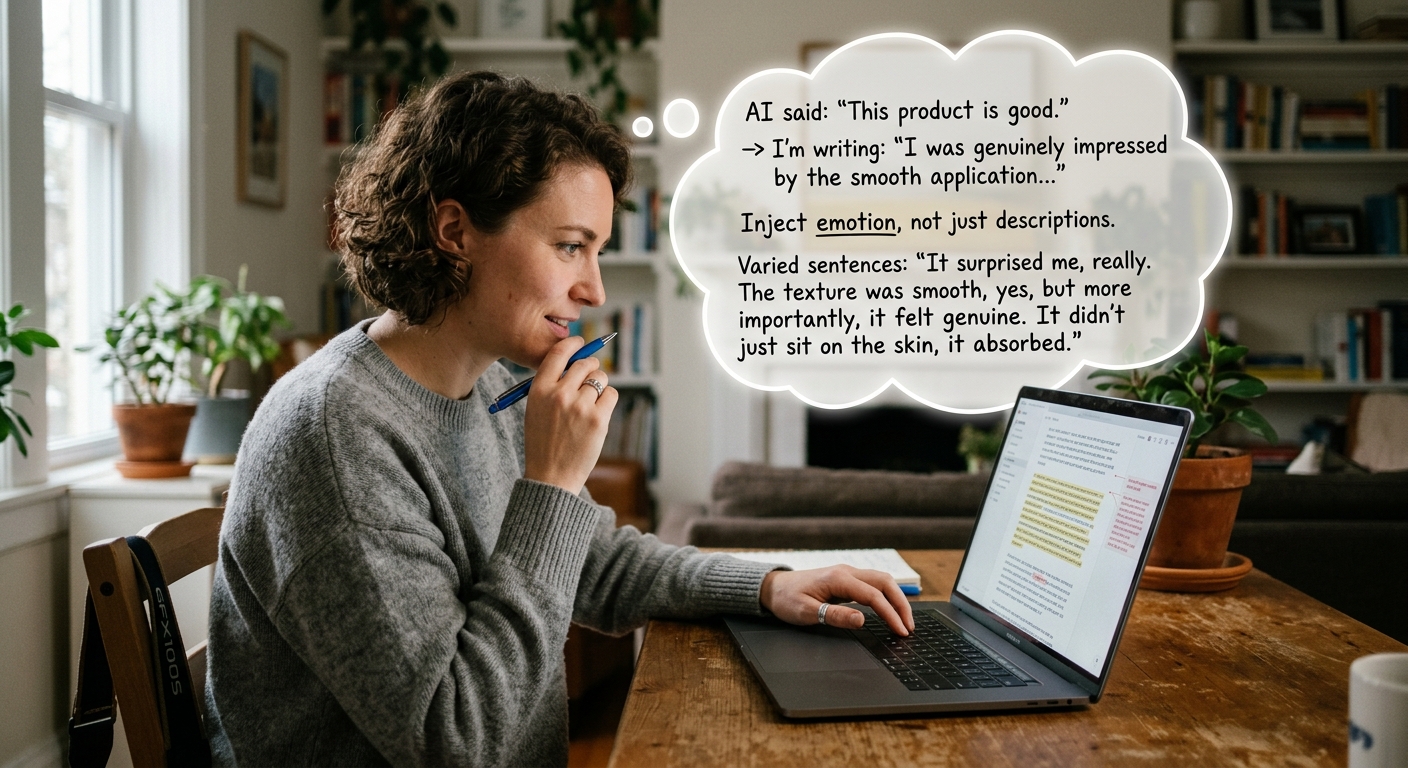
- Varying Sentence Structure and Length
- Incorporating Idioms, Slang, and Colloquialisms
- Adding Nuance, Emotion, and Subjectivity
- Fact-Checking and Adding Specific Details
- Rephrasing and Restructuring
- Strategic Use of Keywords and LSI
- Leveraging AI Humanizer Tools for Undetectable Text
- Best Practices for Undetectable AI Content Creation
- Conclusion
Understanding AI Text Detectors: How They Work (and How to Bypass Them)
Before we dive into making AI text undetectable, it's crucial to understand what these detectors are looking for. AI text detectors typically analyze several linguistic patterns to determine if content was generated by a machine:
- Perplexity: This measures how "surprised" a language model is by a sequence of words. Human writing often has higher perplexity because it's less predictable, featuring unique word choices and unexpected turns of phrase. AI, especially older models, tends to generate text with lower perplexity, sticking to more common and predictable word sequences.
- Burstiness: This refers to the variation in sentence length and structure. Human writers naturally mix long, complex sentences with short, punchy ones. AI often produces sentences of similar length and structure, lacking this natural "burstiness."
- Predictability: AI models are trained on vast datasets and, by their nature, are designed to predict the next most probable word. This can lead to a certain flatness or lack of creativity. Human writing often deviates from the most predictable path, introducing stylistic flair, rhetorical questions, and unique expressions.
- Repetitive Patterns: AI can sometimes fall into repetitive phrasing, redundant ideas, or a consistent tone that lacks the ebb and flow of human conversation.
Knowing these indicators gives us a roadmap. To make AI text undetectable, we need to introduce elements that mimic human unpredictability, variation, and depth, effectively raising its perplexity and burstiness while reducing its predictability.

The "Why" Behind Humanizing AI Text
The motivation to humanize AI-generated text extends beyond simply "beating the system." It's rooted in several practical and ethical considerations for our diverse audience:
- SEO Professionals & Content Writers: Google's E-E-A-T (Experience, Expertise, Authoritativeness, Trustworthiness) guidelines emphasize high-quality, human-centric content. AI-generated text that lacks a unique perspective or deep insight can struggle to rank, as it may be perceived as low-value or generic. Humanizing content ensures it meets these standards, driving better organic performance and audience engagement.
- Academics & Students: Academic integrity is paramount. Submitting AI-generated work without proper humanization can lead to accusations of plagiarism or academic dishonesty. Students and researchers need to ensure their AI-assisted drafts reflect their own understanding, critical thinking, and unique voice.
- Business Professionals: Authenticity builds trust. Whether it's marketing copy, customer communications, or internal reports, content that sounds robotic or generic can alienate audiences and undermine a brand's credibility. Humanized AI text fosters stronger connections and more effective communication.
- General Users: Ultimately, human beings consume content. We respond to stories, emotions, and unique perspectives. Content that feels cold and machine-like fails to resonate, regardless of its factual accuracy. Humanizing AI text makes it more engaging, readable, and impactful for any reader.
Manual Strategies to Make AI Text Undetectable
While AI humanizer tools are incredibly effective, understanding the manual techniques to make AI text undetectable provides a foundational skill set. These strategies allow you to imbue your AI drafts with the unmistakable characteristics of human writing. We often find ourselves asking how to make AI text sound human – these manual steps are key.
Injecting Personal Anecdotes and Voice
One of the quickest ways to humanize text is to add personal touches. AI struggles with genuine personal experience.
- Add "I" or "We" Statements: Even if you're writing for a business, a collective "we" can establish a connection. "We've found that..." or "From our experience..."
- Share a Brief Story: A short, relevant personal anecdote or example can instantly make the content more relatable and unique. For instance, instead of "AI improves efficiency," try "Like many of you, we once struggled with time-consuming content creation, until we discovered how AI could truly improve efficiency."
- Adopt a Consistent Persona: Define a specific tone (e.g., friendly, authoritative, witty) and ensure all content aligns with it.
Varying Sentence Structure and Length
As we discussed, AI often produces uniform sentences. Humans, however, employ a rich tapestry of sentence structures.
- Mix it Up: Combine short, direct sentences with longer, more complex ones that use conjunctions (and, but, or, because) or subordinate clauses.
- Start Sentences Differently: Avoid beginning every sentence with a subject-verb construction. Use adverbs, prepositions, or participial phrases to vary your openings.
- Break Up Long Paragraphs: Human readers prefer digestible chunks of text.
Incorporating Idioms, Slang, and Colloquialisms
Context-appropriate informal language can dramatically increase perceived humanness.
- Use Idioms: Phrases like "hit the nail on the head," "kick the bucket," or "raining cats and dogs" are uniquely human expressions.
- Add Colloquialisms: Depending on your audience, natural, everyday language can make your text more conversational. Just be mindful of your target demographic and avoid overuse.
- Be Mindful of Tone: This strategy requires careful consideration to ensure it aligns with your brand voice and audience expectations.
Adding Nuance, Emotion, and Subjectivity
AI is excellent at objective information but often falls short on emotional depth and subjective interpretation.
- Inject Opinions (Where Appropriate): "We believe that..." or "It's our firm conviction that..." can add a human touch.
- Use Emotive Language: Words like "frustrating," "exciting," "challenging," "delightful" can convey feeling.
- Qualify Statements: Use phrases like "it seems," "it appears," "arguably," "perhaps" to introduce a degree of uncertainty or personal interpretation, mimicking human thought processes.
Fact-Checking and Adding Specific Details
AI can sometimes "hallucinate" or provide generic information. Humans provide precision.
- Verify Information: Always fact-check any statistics, names, or events generated by AI.
- Add Specific Examples: Instead of "many businesses," specify "small businesses in the tech sector." Instead of "improved performance," describe "a 20% increase in conversion rates."
- Cite Sources: For academic or professional content, proper citation is a hallmark of human research.
Rephrasing and Restructuring
Don't just edit words; re-imagine sentences and paragraphs.
- Paraphrase Entire Sections: Take an AI-generated paragraph and rewrite it from scratch in your own words. This is particularly effective for students wondering how to humanize ChatGPT text for their assignments.
- Change the Order of Ideas: Humans often present information in a non-linear, conversational flow. Rework the sequence of sentences or paragraphs to create a more natural progression.
- Condense or Expand: AI might be verbose or too concise. Adjust the length to fit your natural writing style.
Strategic Use of Keywords and LSI
While AI can integrate keywords, humans do it more naturally.
- Avoid Keyword Stuffing: Ensure keywords flow organically within the text.
- Utilize Latent Semantic Indexing (LSI) Keywords: These are related terms and synonyms that human writers naturally use. AI might miss some nuances. Manually add these to enrich the semantic context.
Leveraging AI Humanizer Tools for Undetectable Text
While manual editing is invaluable, it can be time-consuming, especially for large volumes of content. This is where specialized AI humanizer tools come into play. These tools are specifically designed to analyze AI-generated text and rewrite it in a way that mimics human writing patterns, effectively making it undetectable by common AI detectors.
At AuraWrite, we've developed a free AI humanizer tool precisely for this purpose. Our platform takes your AI-generated draft and applies sophisticated algorithms to:
- Increase Perplexity and Burstiness: By varying vocabulary, sentence structure, and paragraph length, our tool makes the text less predictable and more dynamic.
- Infuse Natural Language Patterns: It replaces robotic phrasing with more natural, idiomatic expressions and colloquialisms where appropriate.
- Enhance Readability and Engagement: The output is designed to be more engaging, flowing smoothly and resonating more deeply with human readers.
- Bypass AI Detectors: The primary goal is to transform the text so that it passes through AI detection systems as human-written content.
Using an AI to human text converter like AuraWrite is straightforward. You simply paste your AI-generated content, and the tool processes it, presenting you with a humanized version. This allows content creators, students, and professionals to leverage the speed of AI generation while maintaining the authenticity and quality expected of human-written work. It's an efficient way to make AI text undetectable without spending hours on manual edits.

Best Practices for Undetectable AI Content Creation
To consistently produce AI-assisted content that is truly undetectable and high-quality, we recommend a hybrid approach combining the power of AI humanizer tools with your own human oversight.
- Start with a Strong AI Draft: Don't expect magic from a poor initial prompt. Provide clear, detailed instructions to your AI writing assistant to get the best possible first draft.
- Understand Your Audience and Purpose: Before you even start, know who you're writing for and what you want to achieve. This informs your choice of tone, style, and content.
- Use an AI Humanizer Tool: Leverage tools like AuraWrite to quickly transform the initial AI output. This saves significant time on basic humanization.
- Perform Manual Refinement: After using a humanizer, always review the text yourself.
- Add Your Unique Voice: Inject personal experiences, opinions, and insights that only you can provide.
- Check for Flow and Cohesion: Ensure sentences and paragraphs transition smoothly.
- Verify Facts and Specifics: Double-check any data, names, or complex details.
- Proofread Thoroughly: Catch any grammatical errors, typos, or awkward phrasing that even the best tools might miss.
- Test Your Content (Optional but Recommended): If avoiding detection is critical, you might consider running your final text through a few different AI detection tools to ensure it passes.
- Iterate and Learn: Pay attention to what works and what doesn't. The more you practice humanizing AI text, the more intuitive the process becomes.
Conclusion
The ability to generate content with AI is a powerful advantage, but the true skill lies in refining that content to meet human standards of authenticity, engagement, and originality. Learning how to make AI text undetectable isn't about circumventing rules; it's about elevating the quality of your output to a level that truly connects with your audience and fulfills its purpose, whether for academic success, SEO performance, or business communication.
By understanding the mechanisms of AI detectors, applying thoughtful manual editing strategies, and leveraging advanced AI humanizer tools, you can confidently create content that is both efficient to produce and genuinely human in its appeal. Embrace these techniques, and you'll transform your AI-generated drafts into compelling, undetectable narratives that stand out in a crowded digital landscape.
Ready to transform your AI-generated content into natural, human-like text? Try AuraWrite's free AI humanizer tool today and experience the difference.